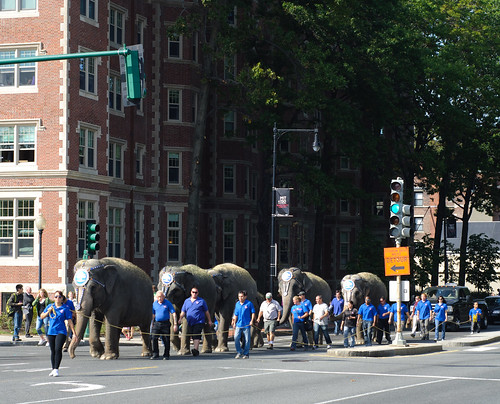
After several years of hearing people talk about this event and glimpsing photos, I was finally able to go see it for myself—elephants marching on Memorial Drive. Yes, REAL elephants.
Every year the Ringling Bros. Circus comes to town, and every year they walk their elephants from a railroad car somewhere behind the MIT campus to TD North Garden along the streets of Cambridge and Boston. I have heard different theories. Some say that it is an old tradition and a way for the circus to announce their arrival into the city. Perhaps once upon a time that was true. However, the parade is not publicized, does not involve anyone but elephants and their caretakers, and seems to be conducted as quickly as possible.
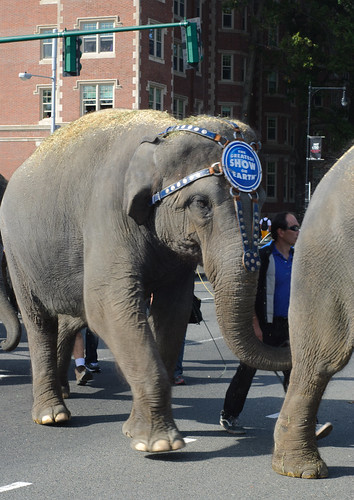
So the theory I prefer to believe is that there is no way to get the special train cars that elephants travel in up to TD North Garden, and so the animals have to make the last ½ mile of the journey on foot. This theory would also explain why a similar parade happens when the circus is leaving town.
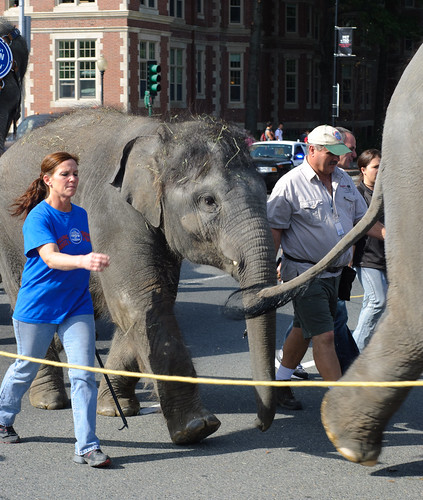
Nick and I arrived at the intersection of Mass Ave and Memorial Drive just as the police was gathering there, preparing to close the streets. There was no crowd, but a few curious bystanders. In just a few minutes, we saw a slow moving lead vehicle and elephants walking behind it!
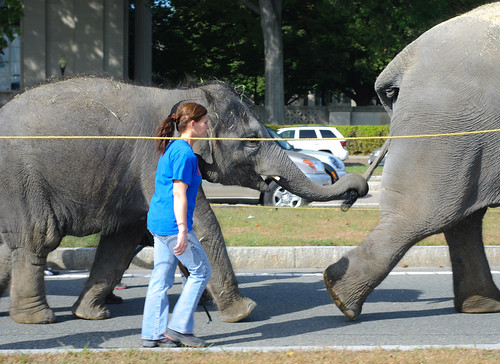
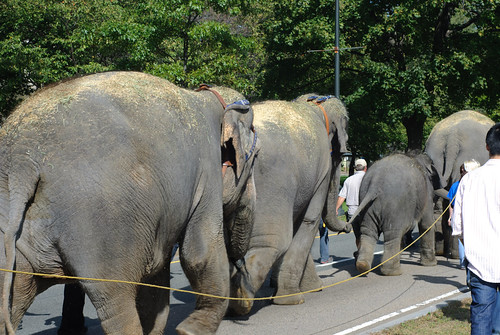
There were 6 Asian elephants—5 adults and one baby (or at least a juvenile). All but the lead elephant were holding on to the tail of the elephant in front of them. The baby elephant let go of the tail in front of him quite a bit, but the extra trainer walking next to him kept encouraging him to hold on.
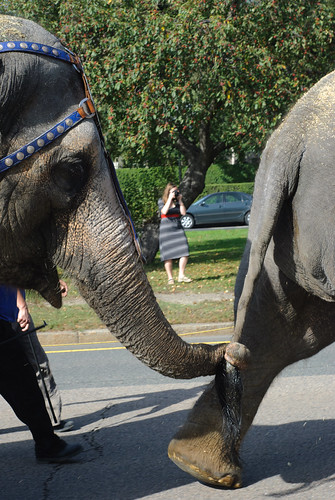
I walked next to the last elephant in the procession for a little bit, and it was having some tail issues as well. The elephant in front of it really wanted to use its tail to swat its own back. But every time the elephant in the front pulled out its tail to do that, the elephant behind him grabbed on to it again. It was rather amusing to watch.
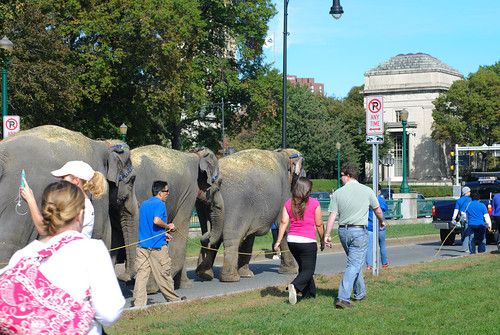
The elephant procession came and went very quickly. Even though the whole spectacle lasted no more than 10 minutes, it left me feeling giddy for the rest of the day. Elephants!
Wednesday, October 12, 2011
Rosh Hashanah
It is a little bit late to talk about Rosh Hashanah, but I will do it anyway.
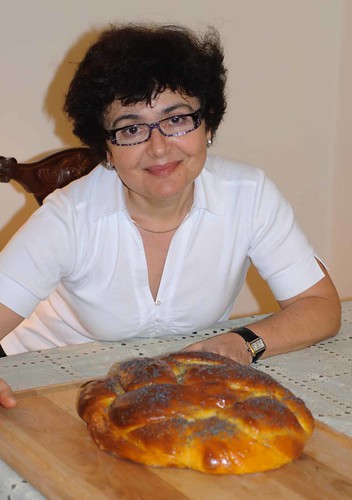
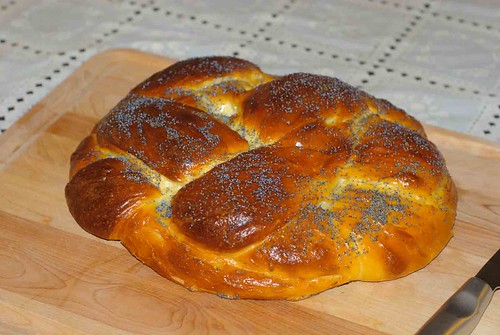
This was our second year in a row baking our own challah—truly a team effort where I mix the dough and shape the bread, while Nick monitors the third and final rising, bastes the bread with the egg glaze and poppy seeds, and does the actual baking.
Saturday, September 10, 2011
Exploring the Forest Hills Cemetery
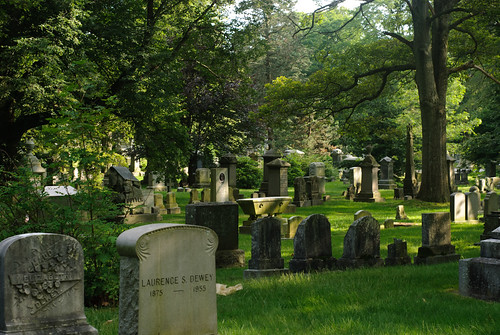
Back in early July, Nick and I ventured out to the Forest Hills Cemetery.
It might not be the first garden cemetery in America like the Mount Auburn Cemetery is in Cambridge, nor can it compete with that cemetery for having more incredibly famous “residents”. Our visit to the cemetery was not unlike a visit to a museum. We wanted to see the works of art in landscape, architecture and sculpture.
Daniel Chester French was one of the main sculptors whose works I wanted to see. Luckily one of his masterpieces is located right next the main entrance to the cemetery.
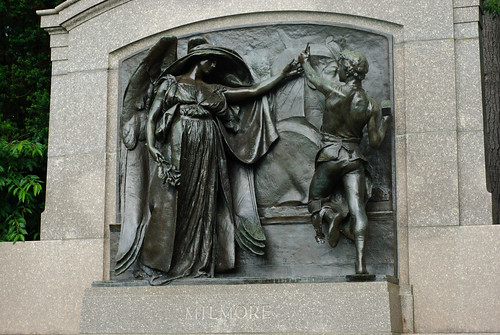
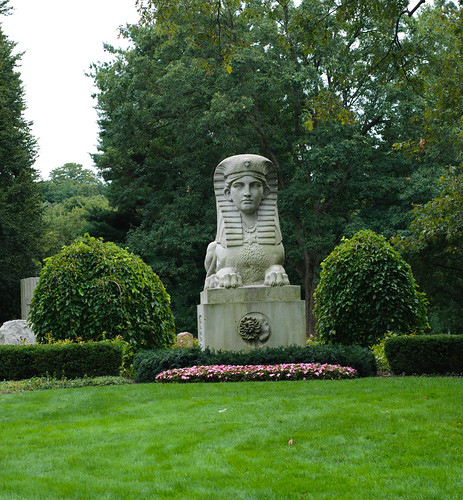
Death and the Sculptor is French’s tribute to his fellow artists, Martin Milmore, a sculptor, and his brother Joseph Milmore, a stone cutter. Interestingly, the bas-relief depicts the sculptor chiseling a sphinx.
You may remember or know this unusual tribute to the Union and the American Civil War at the Mount Auburn Cemetery--this was the work of Martin and Joseph Milmore.
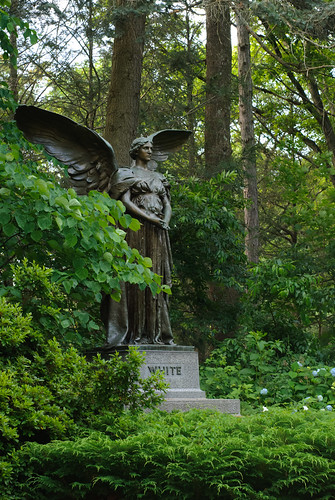
Angel of Peace is another work by Daniel Chester French that we saw. This tall statue is a tribute to George Robert White, a businessman and a Boston philanthropist. His name did not mean anything to me until I started seriously studying my manual for the Longwood Medical Area tour. White donated money to the Massachusetts College of Pharmacy, and the college’s first building built in the Longwood Medical Area was named after him.
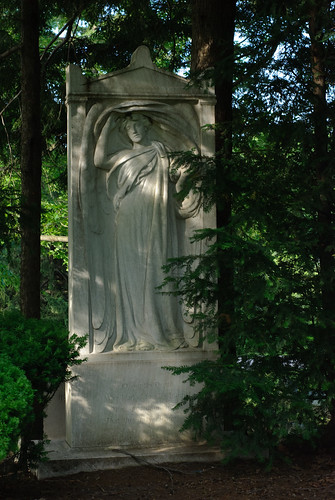
The lesser known 1909 Slocum memorial by Daniel Chester French was difficult to find, but no less graceful and beautiful than the other sculptures.
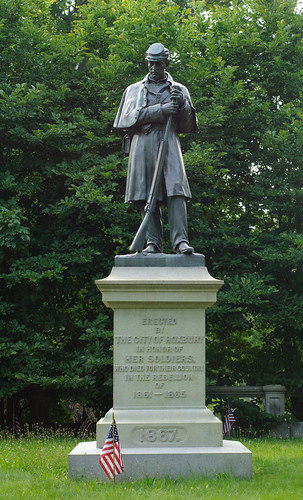
Besides going to see the memorial to Martin Milmore, we also visited his Roxbury Soldiers’ monument or the Citizen Soldier. It is no wonder that this sculpture catapulted him into fame.
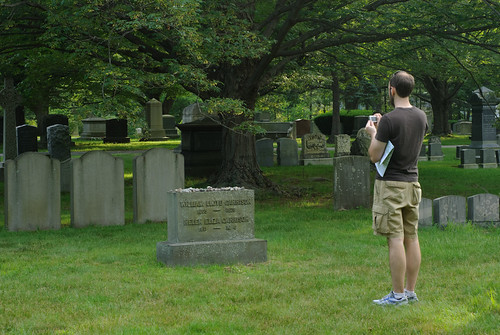
While enjoying the sculpture, we also visited graves of some notable people. Nick particularly wanted to pay his respects to William Lloyd Garrison.
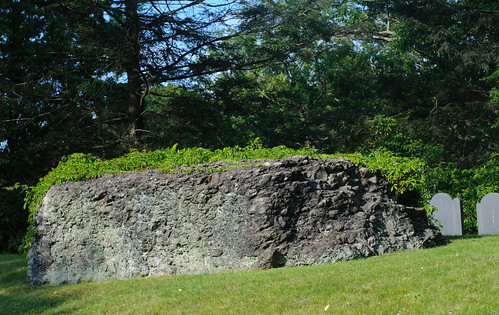
I am very glad to say that I have now been to the site where many of the Warrens are interred.
The important ones for me are Joseph Warren, the physician/spymaster and Revolutionary War hero, his brother John Warren, who established the Harvard Medical School, and his son John Collins Warren, who was one of the founders of the Massachusetts General Hospital and the Boston Medical Library.
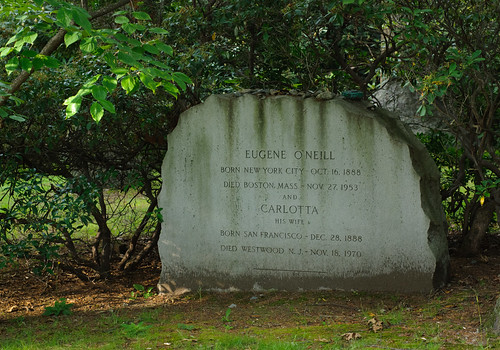
We also visited the graves of e.e. cummings and Eugene O’Neil.
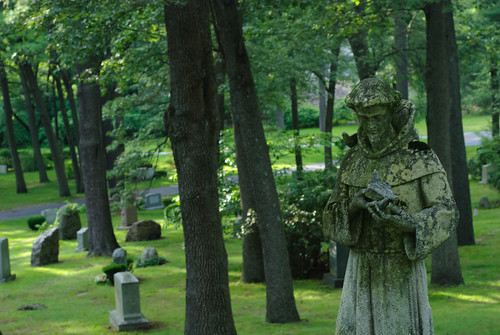
We had a hard time finding the latter, and while Nick was busy looking, I enjoyed taking photos of the statue of Saint Francis, known for his love of animals and founding of the Franciscan order.
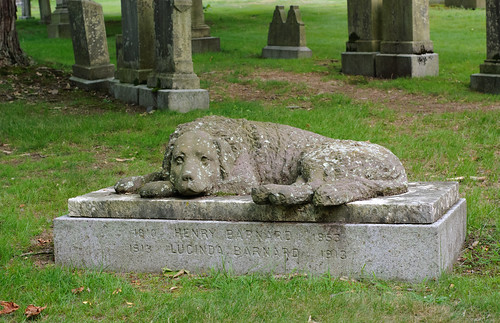
Our last stop before leaving the cemetery was the grave of Henry and Lucinda Barnard.
We actually do not know anything about the Barnards, but the grave is guarded by a beautiful sandstone sculpture of a Newfoundland dog, created by Henry Dexter in 1854. It is not clear to me whether the Barnards had a pet Newfoundland dog. It is more likely that the sculpture acts as a guardian for the grave.
It might not be the first garden cemetery in America like the Mount Auburn Cemetery is in Cambridge, nor can it compete with that cemetery for having more incredibly famous “residents”. Our visit to the cemetery was not unlike a visit to a museum. We wanted to see the works of art in landscape, architecture and sculpture.
Daniel Chester French was one of the main sculptors whose works I wanted to see. Luckily one of his masterpieces is located right next the main entrance to the cemetery.
![]() |
| Death and the Sculptor by Daniel Chester French a tribute to brothers Martin and Joseph Milmore |
![]() |
| Civil War Memorial, sculpted by Martin Milmore |
![]() |
| Angel of Peace by Daniel Chester French a tribute to George Robert White |
![]() |
| The Slocum Memorial by Daniel Chester French |
![]() |
| Citizen Soldier, also known as the Civil War Roxbury Soldiers' monument by Daniel Chester French |
While enjoying the sculpture, we also visited graves of some notable people. Nick particularly wanted to pay his respects to William Lloyd Garrison.
![]() |
| Nick taking photos of the William Lloyd Garrison gravestone |
![]() |
| a boulder of Roxbury pudding stone, marking the Warrens' burial site |
![]() |
| One of the Warrens' headstone This one lists Joseph Warren, John Warren and John Collins Warren |
We also visited the graves of e.e. cummings and Eugene O’Neil.
![]() |
| Eugene O'Neil's headstone |
![]() |
| Saint Francis, known for his love of animals and founding of the Franciscan order, watches over the area called Sleepy Hollow |
![]() |
| Sandstone sculpture of a Newfoundland dog, by Henry Dexter |
Thursday, September 8, 2011
Getting Familiar with the Longwood Medical Area
It has been full 2 months since I blogged. At first I was going to blame the Longwood Medical Area (LMA) tour that I had to give for Boston By Foot at the end of July. But it has now been over a month since I have given the tour... So maybe the tour was only part of the story.
I did spend a lot of time in June and especially July memorizing various facts about the Harvard Medical School and the many hospitals now located in the LMA. There were also many "walk throughs" and a few practice tours... In the end, I think the tour went well, though I wish more people showed up.
A couple of weeks ago I tracked back along the tour route and took photos of the things that I found particularly neat. So here I present you a small peek into the wonders of the tour.
At the end of the 19th century Harvard Medical School was located near Copley Square. The school started looking for a new location in order to have space to expand and to be near hospitals to train the budding doctors. This need played an important role in establishing the Longwood Medical Area.
The Beth Israel Hospital was establish in Roxbury in 1916, but moved to the Longwood Medical Area in 1928. While the hospital welcomed people of all religions and nationalities, it particularly catered to Jewish people, providing kosher meals and religious services.
If you noticed that the South Building in the photo above is built at an angle to other (later) buildings around it and more importantly at an angle to the street, it is because at the time it was really important that the operating rooms get northern light exposure. The natural light requirements turned up in many places on the tour because when many of these buildings were originally built, the electric lighting was simply not sufficient for complicated medical procedures.
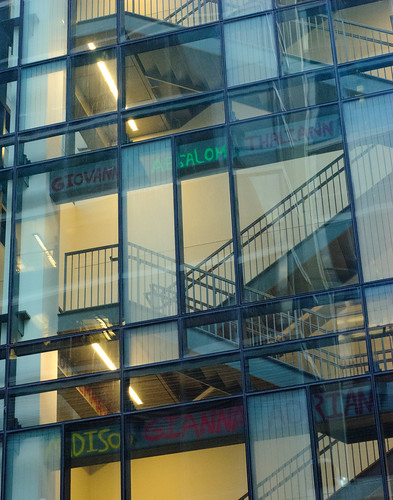
The Yawkey Center, Dana Farber's new clinical building, just opened in late January of this year. Besides the expected numerous exam and consultation rooms, the center also has over 300 works of art on display for the patients and a two story healing garden. The building has a green roof, landscaped with native plants. During the Yawkey Center construction ironworkers wrote the names of patients on the steel beams. Some of the names still remain visible in honor of the patients.
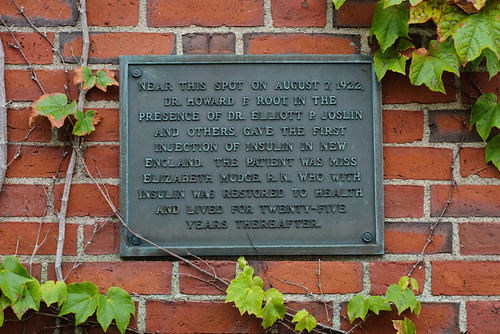
It was interesting to learn about the early treatment of diabetes. Apparently before insulin became available in 1922, the only way to "treat" diabetes was essentially by starvation.
And now it is time for one of my favorite parts of the tour--the original building of the Angell Memorial Hospital.
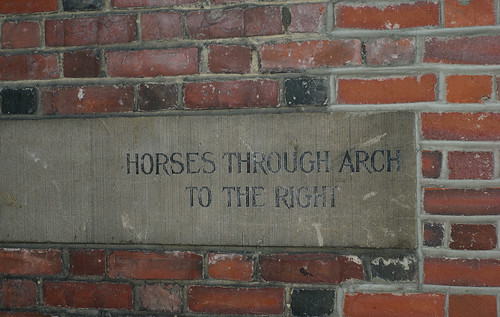
When the Angell Memorial Hospital first opened in 1915 on Longwood Avenue, it was the first large animal veterinary hospital in the United States. As it was the age of the horse, people brought their ailing horses here. The inscription asks that the horses be taken through the arch and into the courtyard.
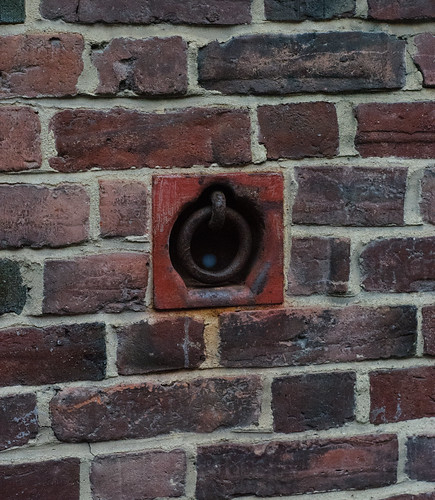
All around the courtyard there are still rings mounted into the walls, once used for tethering horses to be examined. In 1976 Angell Memorial moved to a new much larger facility in Jamaica Plain, and this building today belongs to Harvard and is being used for office space. Luckily these small remnants of the veterinary hospital still remain.
I did spend a lot of time in June and especially July memorizing various facts about the Harvard Medical School and the many hospitals now located in the LMA. There were also many "walk throughs" and a few practice tours... In the end, I think the tour went well, though I wish more people showed up.
A couple of weeks ago I tracked back along the tour route and took photos of the things that I found particularly neat. So here I present you a small peek into the wonders of the tour.
![]() |
| Gordon Hall at the top of the Harvard Medical School Quad |
![]() |
| The Stoneman Building, originally the South Building, built in 1948 It is the 2nd building of the Beth Israel Hospital in the LMA |
If you noticed that the South Building in the photo above is built at an angle to other (later) buildings around it and more importantly at an angle to the street, it is because at the time it was really important that the operating rooms get northern light exposure. The natural light requirements turned up in many places on the tour because when many of these buildings were originally built, the electric lighting was simply not sufficient for complicated medical procedures.
![]() |
| Yawkey Center, the newest clinical building of the Dana-Farber Cancer Institute, just opened in late January this year |
![]() |
| Patients names written on steel beams exposed in the Yawkey Center |
![]() |
| A plaque on the Libby Building of the Deaconess Hospital that marks the spot where insulin was administered for the first time in New England to a diabetes patient, Elizabeth Mudge |
And now it is time for one of my favorite parts of the tour--the original building of the Angell Memorial Hospital.
![]() |
| An inscription inside the arch of the Angell Memorial Hospital original building |
![]() |
| Rings for tethering horses to be examined in the courtyard of the original Angell Memorial Hospital building |
Wednesday, July 6, 2011
Monday, July 4, 2011
Gardening on the Fire Escape
Our condo association suddenly decided that we can have a flower box on the fire escape. I am personally skeptical about this lapse in fire safety. The association also stated that anyone caught on the fire escape in a non-emergency situation will be fined $500. So does mounting the flower box and watering the plants constitute an emergency? But I have always wanted a flower box, so here I go. Grow, herbs, grow!
| Sweet basil and parsley hiding behind petunias. (Please, no aphids, please!) |
| Another pot of sweet basil, and a pot of cilantro! |
Wednesday, June 29, 2011
Subscribe to:
Posts (Atom)